Smart Bin Assembly Plant: Advanced Manufacturing for Intelligent Waste Management Solutions

smart bin assembly plant

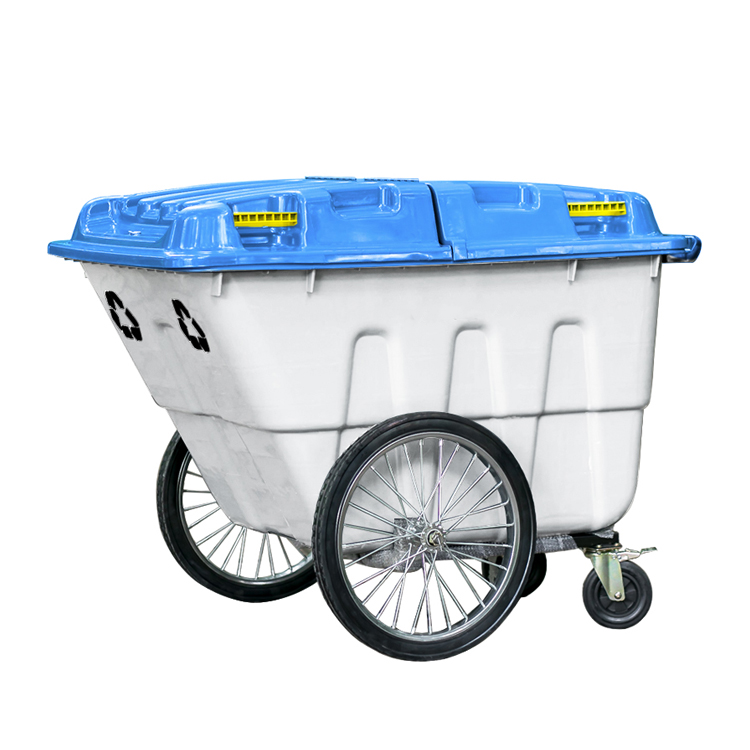
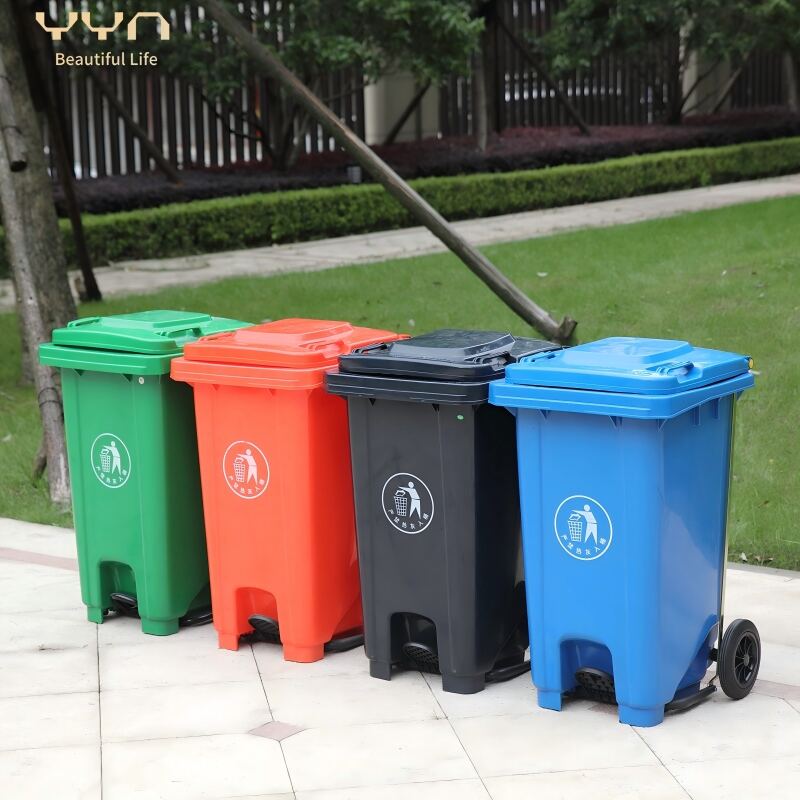
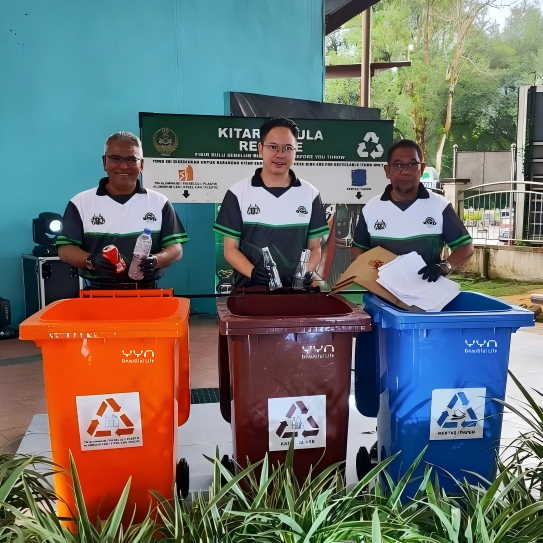
A smart bin assembly plant represents a modern manufacturing facility dedicated to producing intelligent waste management systems that incorporate advanced sensors, connectivity features, and automated mechanisms. These specialized production facilities combine precision engineering with cutting-edge technology to create waste containers that actively monitor fill levels, optimize collection routes, and contribute to sustainable urban environments. The smart bin assembly plant integrates various manufacturing processes including molding, electronics assembly, software integration, and quality testing to deliver fully functional intelligent waste management solutions. The main functions of these production facilities encompass the fabrication of durable container bodies using high-grade polymers or metals, installation of sensor arrays capable of detecting fill levels through ultrasonic or weight-based measurements, integration of wireless communication modules for real-time data transmission, and assembly of solar panels or battery systems for autonomous power supply. These plants employ sophisticated production lines where robotics and human expertise work together to ensure consistent quality standards. Technological features within these facilities include automated welding stations for structural integrity, clean rooms for sensitive electronics assembly, programming stations where firmware gets uploaded to each unit, and comprehensive testing chambers that simulate various environmental conditions. The manufacturing process incorporates Internet of Things technology, enabling each produced unit to connect seamlessly with cloud-based management platforms. Applications of products from a smart bin assembly plant span numerous sectors including municipal waste management systems where cities deploy these units across public spaces, commercial properties seeking efficient waste handling solutions, educational campuses aiming to promote recycling behaviors, and smart city initiatives focused on data-driven environmental management. The facility design prioritizes flexibility to accommodate different bin capacities ranging from compact street-side units to large-scale industrial containers, while maintaining production efficiency through lean manufacturing principles and just-in-time inventory management systems.

New Product Releases

The smart bin assembly plant delivers substantial economic benefits to customers by significantly reducing long-term operational expenses associated with waste management activities. Traditional waste collection operates on fixed schedules regardless of actual fill levels, leading to unnecessary fuel consumption and labor costs when crews service half-empty containers or miss overflowing ones. Products from these specialized facilities eliminate this inefficiency by providing real-time monitoring that allows collection services to operate only when bins actually require emptying. This optimization typically reduces collection frequency by thirty to fifty percent, directly translating to lower fuel expenditures, reduced vehicle maintenance costs, and more efficient crew deployment. Environmental advantages prove equally compelling as these manufacturing facilities produce units that actively contribute to sustainability goals. The smart bins manufactured help municipalities and organizations dramatically decrease their carbon footprint by minimizing unnecessary collection vehicle trips throughout service areas. Each avoided trip represents significant emissions reductions, supporting corporate environmental responsibility initiatives and helping cities meet climate action commitments. Furthermore, many units incorporate features encouraging proper waste sorting, increasing recycling rates and diverting materials from landfills. The data collection capabilities built into every unit provide unprecedented visibility into waste generation patterns, enabling customers to make informed decisions about container placement, capacity requirements, and service optimization strategies. Facility managers gain access to comprehensive dashboards displaying real-time status across entire fleets of bins, historical trend analysis revealing seasonal variations, and predictive analytics forecasting future needs. This intelligence transforms waste management from reactive problem-solving to proactive resource planning. Operational reliability represents another significant advantage as the smart bin assembly plant implements rigorous quality control measures throughout production. Each unit undergoes extensive testing simulating years of outdoor exposure, extreme temperature fluctuations, and continuous sensor operation. This thoroughness ensures customers receive durable products requiring minimal maintenance, with typical operational lifespans exceeding ten years under normal conditions. The manufacturing process incorporates weatherproof sealing techniques, corrosion-resistant materials, and redundant communication pathways guaranteeing consistent performance across diverse climates and usage environments. Customer support extends beyond initial purchase through firmware updates delivered wirelessly, enabling continuous improvement and new feature deployment without physical interventions. Scalability advantages allow organizations to start with pilot deployments and expand gradually as they recognize benefits, with the smart bin assembly plant capable of fulfilling orders ranging from dozens to thousands of units while maintaining consistent quality standards and competitive pricing through economies of scale.

Latest News

Abei Launches New HDPE Trash Bins: More Durable for Outdoor Use

22

Jan

Abei Launches New HDPE Trash Bins: More Durable for Outdoor Use

View More
Abei Partners with Southeast Asian Sanitation Company: Overseas Market Growth

22

Jan

Abei Partners with Southeast Asian Sanitation Company: Overseas Market Growth

View More
Abei’s Taobao Store Reaches 5,000 Followers: C-end Market Expansion

22

Jan

Abei’s Taobao Store Reaches 5,000 Followers: C-end Market Expansion

View More

Get a Free Quote

Our representative will contact you soon.
Email
Mobile/WhatsApp
Name
Company Name
Attachment
Please upload at least an attachment
Up to 3 files, each no larger than 30MB. Supported formats: jpg, jpeg, png, pdf, doc, docx, xls, xlsx, csv, txt, stp, step, igs, x_t, dxf, prt, sldprt, sat, rar, zip.
Message
0/1000

smart bin assembly plant

Advanced Sensor Integration and Real-Time Monitoring Capabilities

Advanced Sensor Integration and Real-Time Monitoring Capabilities

The smart bin assembly plant excels in producing units equipped with sophisticated multi-sensor arrays that provide unprecedented visibility into waste container status and usage patterns. Each manufactured bin incorporates ultrasonic distance sensors positioned at optimal angles to accurately measure fill levels regardless of waste type or composition, whether dealing with compacted materials, loose refuse, or mixed recycling streams. These sensors employ signal processing algorithms developed specifically for waste management applications, filtering out interference from steam, dust, or irregular surface contours that might otherwise compromise measurement accuracy. The manufacturing facility ensures precise calibration of each sensor during assembly, with dedicated testing stations verifying measurement precision across the full range from empty to completely filled containers. Beyond basic fill detection, the smart bin assembly plant integrates temperature sensors monitoring internal conditions to detect potential fire hazards from improperly discarded materials, providing early warning systems that protect property and public safety. Tilt sensors embedded during production detect unauthorized movement or vandalism attempts, triggering immediate alerts to facility managers or security personnel. The assembly process incorporates ruggedized sensor housings designed to withstand impacts, moisture exposure, and temperature extremes encountered in outdoor deployments. Communication modules installed at the facility enable each bin to transmit collected data through multiple connectivity options including cellular networks, LoRaWAN long-range protocols, or NB-IoT networks depending on customer requirements and local infrastructure availability. The smart bin assembly plant configures these communication systems with intelligent fallback mechanisms, automatically switching between available networks to maintain continuous connectivity even when primary channels experience disruptions. Power management systems assembled at the facility incorporate high-efficiency solar panels paired with robust battery backup, ensuring sensors and communication modules operate reliably even during extended periods of limited sunlight. The manufacturing process includes weatherproof sealing techniques protecting sensitive electronics from moisture infiltration while maintaining adequate ventilation to prevent condensation buildup. Quality assurance protocols verify each sensor's performance through simulated fill cycles and environmental stress testing before units leave the production facility, guaranteeing customers receive fully functional monitoring systems ready for immediate deployment.
Customizable Production Capabilities and Flexible Design Options

Customizable Production Capabilities and Flexible Design Options

The smart bin assembly plant distinguishes itself through remarkable flexibility in accommodating diverse customer requirements and specific application needs across various waste management scenarios. Unlike rigid production facilities limited to standardized models, this specialized plant maintains modular assembly lines capable of producing bins in multiple capacities ranging from compact forty-liter pedestrian units to massive industrial containers exceeding one thousand liters. The manufacturing infrastructure supports rapid reconfiguration between production runs, allowing efficient fulfillment of orders mixing different bin types, colors, and feature sets without extensive downtime or setup delays. Material selection processes at the facility offer customers choices between recycled high-density polyethylene for cost-effective lightweight solutions, powder-coated steel for enhanced durability in high-traffic areas, or stainless steel for premium applications requiring superior corrosion resistance and aesthetic appeal. The smart bin assembly plant maintains relationships with certified material suppliers ensuring consistent quality while supporting sustainability initiatives through responsible sourcing practices. Design customization extends to branding opportunities where the facility incorporates customer logos, municipality emblems, or corporate color schemes directly into the manufacturing process through techniques including embedded molding, durable decal application, or powder coating in custom colors. Sensor configurations adapt to specific monitoring requirements, with options for single-point fill detection suitable for general waste applications or multi-point sensing arrays providing detailed volume profiling for recycling sorting verification. The assembly plant engineers work closely with customers to specify appropriate communication protocols, selecting from cellular, satellite, or terrestrial wireless options based on deployment locations and existing infrastructure investments. Mounting configurations manufactured at the facility accommodate various installation scenarios including ground-mounted pedestrian access, wall-mounted space-saving designs, underground container systems, or specialized vehicle-mounted applications. The production facility maintains extensive component inventories enabling rapid prototype development when customers require specialized features or integration with existing waste management systems. Software customization capabilities allow the smart bin assembly plant to configure device firmware according to specific reporting intervals, alert thresholds, or integration requirements with third-party fleet management platforms. This flexibility proves invaluable for organizations managing diverse property portfolios requiring consistent monitoring capabilities across locations with varying infrastructure and operational constraints.
Comprehensive Quality Assurance and Long-Term Reliability Standards

Comprehensive Quality Assurance and Long-Term Reliability Standards

The smart bin assembly plant implements exhaustive quality control measures throughout every production stage, ensuring customers receive waste management solutions built to withstand years of demanding outdoor service with minimal maintenance requirements. Quality assurance begins with incoming material inspection where specialized teams verify that plastics, metals, electronic components, and fasteners meet stringent specifications for durability, environmental resistance, and performance consistency. The manufacturing facility operates certified testing laboratories equipped with environmental chambers simulating extreme conditions including temperature cycling between minus forty and plus seventy degrees Celsius, humidity exposure reaching ninety-five percent saturation, and accelerated weathering equivalent to years of ultraviolet radiation exposure. Each production batch undergoes structural integrity testing where bins experience impact forces simulating rough handling during installation and service, compression testing verifying load-bearing capabilities when stacked during storage or transport, and seal integrity verification ensuring weatherproof protection of internal electronics. The smart bin assembly plant employs automated optical inspection systems examining weld quality, component placement accuracy, and surface finish consistency at multiple production checkpoints, immediately flagging any deviations from specifications before defective units progress further through assembly. Electronic subsystems receive individual functional testing verifying sensor accuracy, communication module connectivity, and power system performance before integration into complete assemblies. Final acceptance testing subjects every manufactured unit to comprehensive validation including sensor calibration verification across the full measurement range, communication protocol compliance testing ensuring compatibility with specified network infrastructure, and extended operational testing running continuous measurement and transmission cycles for minimum periods of seventy-two hours. The facility maintains detailed production records for every unit including component traceability, test results, and configuration parameters, enabling rapid diagnosis if field issues emerge and supporting warranty administration. Quality extends beyond initial production through the smart bin assembly plant's commitment to continuous improvement, analyzing field performance data to identify enhancement opportunities and incorporating lessons learned into subsequent production runs. The manufacturing facility partners with component suppliers to ensure long-term availability of replacement parts, supporting customers who require spare sensors, communication modules, or battery systems years after initial deployment. Warranty programs backed by the production facility typically extend three to five years covering manufacturing defects and component failures, with optional extended coverage available for customers seeking maximum investment protection. This comprehensive approach to quality assurance means customers can confidently deploy these intelligent waste management solutions knowing they represent reliable long-term assets rather than experimental technology requiring frequent replacement or extensive maintenance interventions.
Get a Free Quote

Our representative will contact you soon.
Email
Mobile/WhatsApp
Name
Company Name
Attachment
Please upload at least an attachment
Up to 3 files, each no larger than 30MB. Supported formats: jpg, jpeg, png, pdf, doc, docx, xls, xlsx, csv, txt, stp, step, igs, x_t, dxf, prt, sldprt, sat, rar, zip.
Message
0/1000